

3D printing has become one of the most accessible manufacturing technologies available today. From hobbyists and designers to engineers and businesses, more people in the UK are turning to 3D printing to create prototypes, custom parts, and unique products.
However, one of the most common questions people ask before starting a project is simple: how much does 3D printing cost in the UK?
The price of 3D printing can vary widely depending on several factors including the size of the object, the material used, the complexity of the design, and the printing technology required. Understanding these factors can help you estimate the cost of your project and make smarter decisions when ordering a 3D print.
In this guide, we will break down the main factors that affect 3D printing prices and explain what you can expect to pay when using a professional 3D printing service in the UK.
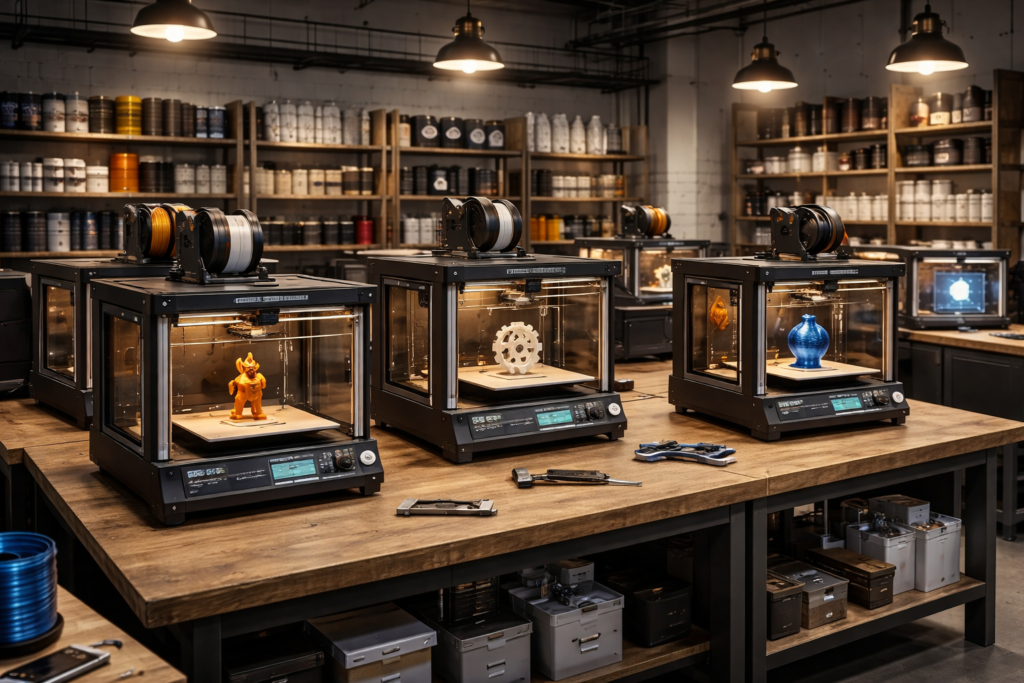
The cost of a 3D printed object is influenced by several important factors. Professional 3D printing services typically calculate prices based on material usage, print time, machine operation, and post-processing.
One of the biggest cost factors is the size of the object. Larger models require more material and longer printing times. A small prototype might take only one hour to print, while larger parts may require many hours or even days.
Because 3D printers build objects layer by layer, printing time increases quickly with size. This is why larger parts typically cost more.
Printing time directly affects the cost of a project. High-resolution prints or complex geometries often take longer to produce. The longer a printer runs, the more machine time is used.
Professional print farms often calculate cost partly based on the time required to complete the job.
Different materials have different costs. Standard materials like PLA are usually affordable, while engineering materials such as carbon-fiber reinforced filaments or specialty resins can increase the price significantly.
Material also affects strength, durability, flexibility, and surface quality.
Highly detailed models, intricate geometries, or designs that require support structures can increase the cost of printing.
Complex designs require:
This can slightly increase the final price.
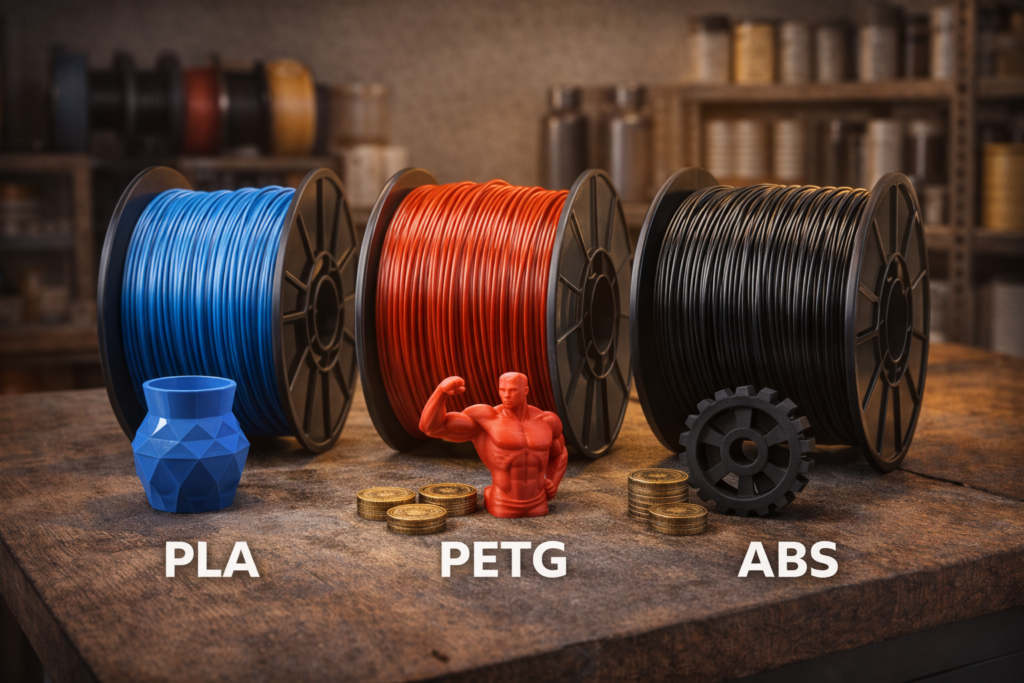
Material choice plays a major role in determining the price of a 3D printed object. Each material has different properties and costs.
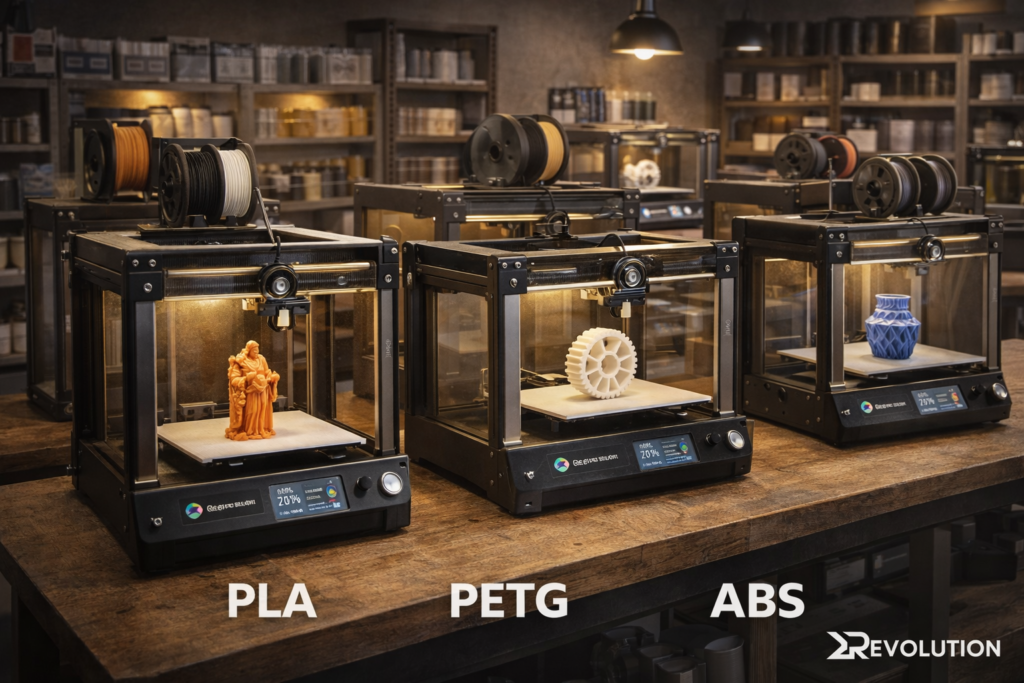
PLA is one of the most commonly used 3D printing materials. It is affordable, easy to print, and suitable for many everyday applications.
PLA is often used for:
Because it prints easily and quickly, PLA is usually the most affordable option.
PETG offers improved strength and durability compared to PLA. It is resistant to moisture and chemicals, making it suitable for more functional parts.
Common uses include:
PETG is slightly more expensive than PLA but provides better durability.
ABS is a strong engineering material commonly used in manufacturing. It is more heat resistant and durable than PLA.
ABS is often used for:
Printing ABS requires controlled environments, which may increase the cost slightly.
Resin printing produces extremely detailed models with smooth surfaces. It is often used for miniatures, jewelry, dental models, and high-precision prototypes.
Because resin printers operate differently and require additional post-processing, SLA printing is usually more expensive than standard FDM printing.
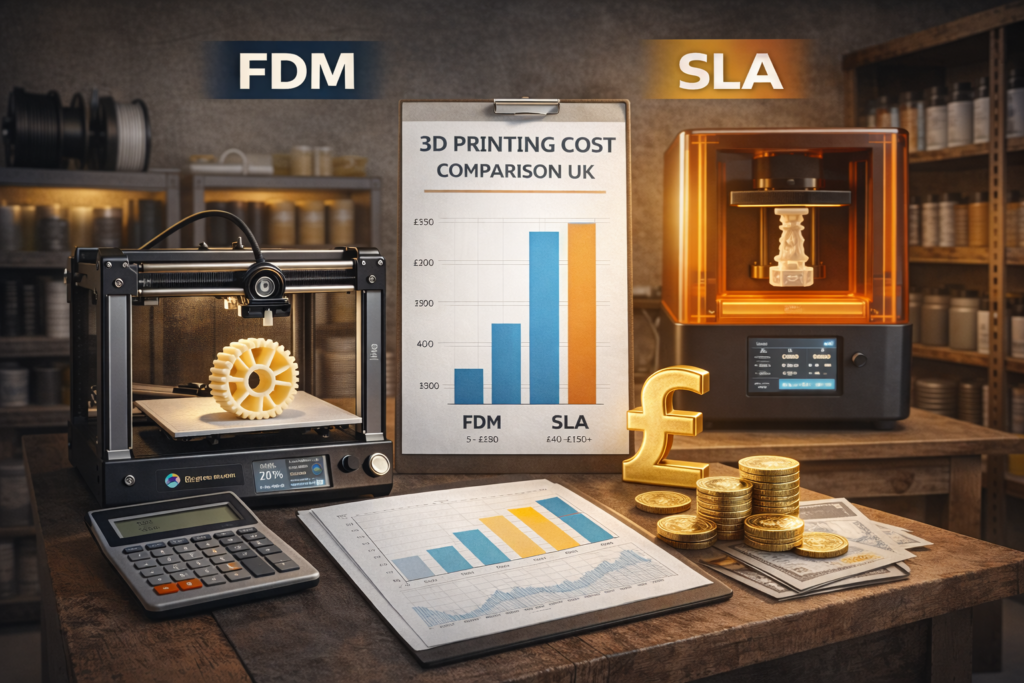
Two of the most common 3D printing technologies are FDM and SLA.
FDM (Fused Deposition Modeling) is the most widely used 3D printing technology. It works by melting plastic filament and depositing it layer by layer.
Advantages of FDM:
Because of its efficiency, FDM printing is generally the most cost-effective option.
SLA (Stereolithography) uses liquid resin cured by light to create highly detailed models.
Advantages of SLA:
However, SLA prints require washing, curing, and finishing, which increases the overall cost.
Although prices vary between services, the following ranges give a general idea of typical costs.
Small prints:
Medium parts:
Large prints:
Highly detailed resin models may cost more depending on complexity.
Professional online 3D printing services in the UK often provide instant quotes based on your uploaded 3D model file.
There are several ways to reduce the cost of a 3D printing project without sacrificing quality.
Removing unnecessary material or hollowing large models can significantly reduce material usage.
Using standard materials such as PLA can help keep costs low for prototypes and decorative items.
Lower infill percentages reduce the amount of material used inside the model, making prints faster and cheaper.
Designing models that require fewer supports can reduce material use and post-processing time.
3D printing has made it easier than ever to produce custom parts, prototypes, and unique designs without expensive tooling or manufacturing processes.
At 3DRevolution.co.uk, we offer reliable and affordable 3D printing services in the UK using advanced FDM and SLA technologies. Whether you need a single prototype, a custom component, or a small production run, our printing solutions deliver precision and quality at competitive prices.
Simply upload your 3D model file and receive a fast quote for your project.
3D printing prices can vary depending on the service provider, the complexity of the model, and the required material. Most professional services now provide instant online quotes based on uploaded STL or STEP files.
To get the most accurate price estimate, it is important to provide the correct file format, model dimensions, and the desired material. Some services also allow customers to select layer height, infill density, and finishing options.
Online quoting systems make the ordering process much easier. Instead of manually requesting prices, users can upload their model and receive an immediate cost estimate based on material usage and printing time.
Professional 3D printing services in the UK often support multiple file formats including STL, STEP, and OBJ. Choosing the correct format helps avoid geometry errors and ensures the model prints correctly.